Thickness Range for Oxy-Fuel Cutting of S355J2 Steel Plate
S355J2 is a low-alloy low-carbon structural steel with a carbon equivalent of approximately 0.45, fully suitable for oxy-fuel cutting. Its cutting thickness range is consistent with ordinary Q355 carbon steel. Preheating procedures are required for extra-thick plates to prevent hardening and cold cracking along cutting edges.
1. General Industrial Cutting Thickness Range
1.1 Recommended Stable Cutting Range (Optimal for cutting quality, deformation control and cost)
8 mm ~ 300 mm
- 8–30 mm Medium & Thin Plates Oxy-fuel cutting is feasible yet brings wide heat-affected zones, severe plate deformation and rough cut surfaces. Plasma or laser cutting is preferred for mass thin plate processing. If oxy-fuel cutting is mandatory, use small-size cutting nozzles at low travel speed and preheat the plate above 100℃ in advance.
- 30–120 mm Medium-thick Plates (Best range for oxy-fuel cutting) Balanced cutting efficiency, smooth cut edges and economic cost, widely adopted for structural steel and mechanical blanking.
- 120–300 mm Extra-thick Plates Oxy-fuel cutting is the low-cost solution for this thickness. High-power cutting torches and high-pressure cutting oxygen are required, with extended preheating duration.
1.2 Theoretical Thickness Limits
- Minimum theoretical limit: 3 mm Plates thinner than 6 mm are prone to burn-through, heavy slag adhesion and dimensional deviation during oxy-fuel cutting, rarely used in engineering except for small batch emergency blanking.
- Maximum theoretical limit: 300–1000 mm Standard CNC flame cutting machines support up to 300 mm thickness. Custom heavy-duty torches and large gantry oxy-fuel equipment can cut 500–1000 mm plates, mainly for heavy casting, forging and ultra-thick frame rough machining.
2. Standard Cutting Thickness by Equipment Type
- Portable Hand Cutting Torch (Acetylene / Propane) Stable cutting range: 6–50 mm; maximum cutting limit 80 mm with poor cut quality and high labor intensity.
- Semi-automatic Trolley Flame Cutter (Universal CG1 Model) Standard range: 6–150 mm; extended torch version supports 200–270 mm.
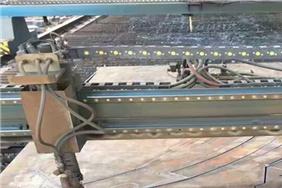
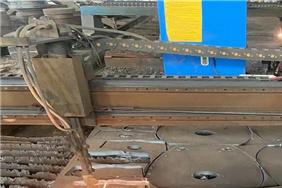
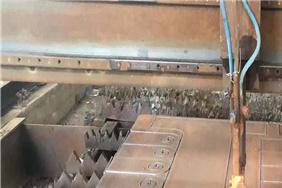
- Gantry CNC Flame Cutting Machine (Mainstream Industrial Equipment) Standard cutting capacity: 8–300 mm; heavy customized models reach 500 mm.
3. Exclusive Oxy-Fuel Cutting Guidelines for S355J2 (Key Points for Low Alloy Steel)
- Mandatory Low-temperature Preheating Preheat plates with thickness over 40 mm to 100–150℃ entirely before cutting to eliminate hardened layers on cutting edges and avoid cold cracks during subsequent welding. Full preheating is required for all thicknesses under ambient temperature below 0℃.
- Heat-affected Zone A 2–3 mm hardened strip forms on both sides of the cut after oxy-fuel cutting. Grind off the hardened layer if welding or machining will be performed afterwards.
- Not Recommended Application Scenarios Mass production of plates ≤6 mm and high-precision components; replace oxy-fuel cutting with plasma cutting.
4. Concise Summary for Technical Documents
- Preferred process thickness: 8 mm ~ 300 mm
- Hand torch applicable range: 6–50 mm
- Standard gantry CNC cutting: 8–300 mm, max 500 mm for heavy-duty models
- Not suitable for oxy-fuel cutting: plates thinner than 6 mm (severe deformation & low precision)
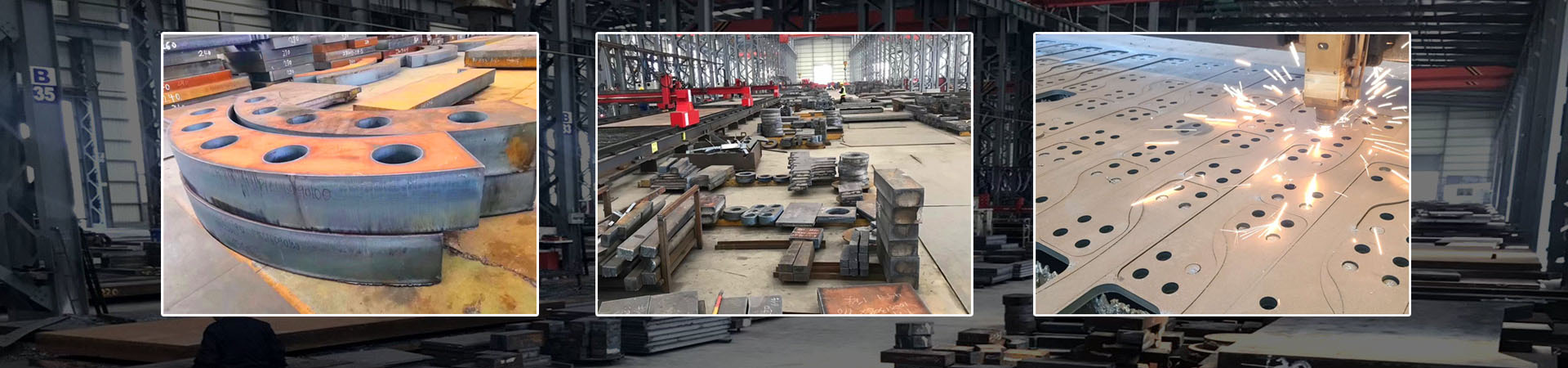
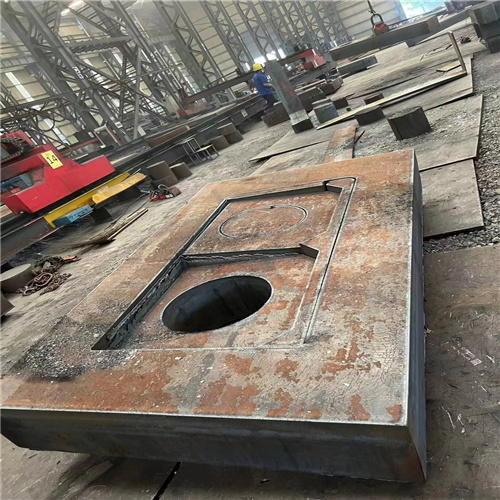
Cutting processing: wear-resistant steel plates (NM360/NM400/NM450/NM500/Mn13), high-strength plates (Q690D/E/S690Q/QL), ordinary plates (Q235B/S235JR), low alloy plates (Q355B/C/D/E/S355JR/J0/J2/K2), carbon bonded plates (45 #, S45C, S50C, bm48c), as well as various special alloy steels from large steel mills such as Wuhan Iron and Steel Group, Liangang, Baosteel, Ansteel, Shagang, Nangang, Hanye, Xingcheng, Yingkou, Ma Steel, etc., as well as Tang Steel, Wenfeng, Ping Steel, etc. The specification is 6MM-500MM thick.
We have good business channels with major steel mills and undertake various types of steel plate OEM processing business. The processing center can cut various supporting materials for engineering machinery, metallurgical equipment, mining machinery, etc. according to customer requirements, such as square plates, circular cakes, flanges, machine side plates, irregular parts, bearing support seats, etc., and process various irregular parts, support seats, machine tool side plates, metallurgical mines, and other supporting materials