1. Standards and Grade Definitions
| Item |
Q690 (Chinese National Standard) |
S690 (European Standard EN 10025-6) |
| Applicable Standard |
GB/T 16270-2009 (Quenched & Tempered high-strength plate), GB/T 1591 (TMCP thermo-mechanical controlled rolling) |
EN 10025-6, Material No. 1.8931 |
| Grade Definition |
Q = Yield strength; figure 690 = Minimum yield strength 690MPa; suffix C/D/E/F: Impact test at 0℃/-20℃/-40℃/-60℃ |
S = Structural steel; 690 = Minimum yield strength 690MPa; Q = Quenched & Tempered; L = Low-temperature impactS690Q (ambient temperature), S690QL (-20℃), S690QL1 (-40℃), S690QL2 (-60℃) |
| Application System |
Mainstream for domestic construction machinery, lifting equipment and mining machinery |
Export machinery, EU projects, wind power and offshore engineering |
| Equivalent Matching |
Q690D ≈ S690Q; Q690E ≈ S690QL; Q690F ≈ S690QL1 |
Replaces corresponding low-temperature grades of domestic Q690 in reverse |
2. Delivery State Differences (Critical)
- Q690 Two supply forms: ① TMCP thermo-mechanical rolled (low cost, slightly lower hardening tendency); ② Q&T quenched and tempered (high toughness, primary choice for thick plates). Domestic steel mills can flexibly switch between rolling and quenching & tempering processes.
- Full S690 Series Mandatorily delivered in Q&T quenched & tempered condition (uniform quenching + high-temperature tempering after production); TMCP rolling supply is prohibited. S690 features stable microstructure and highly consistent low-temperature toughness, mandatory base material for overseas engineering projects.
3. Chemical Composition & Carbon Equivalent
Both grades are low-carbon low-alloy steels strengthened by Nb/V/Ti/B/Mo, with carbon equivalent CE ranging from 0.45 to 0.52. They share similar hardening tendency and are prone to hardening cracks at cutting edges after thermal cutting.
- S690 adopts stricter control on alloy ratios with lower limits of P/S impurities (S ≤ 0.015%), featuring superior resistance to lamellar tearing and fatigue performance compared with ordinary domestic Q690.
- Partial TMCP rolled Q690 allows higher upper limit of Mn content with lower material cost.
4. Mechanical Property Comparison (Plate thickness t ≤ 50mm)
表格
| Performance Index |
Q690E (-40℃) |
S690QL (-40℃) |
| Yield Strength ReH |
≥690MPa |
≥690MPa |
| Tensile Strength Rm |
770~940MPa |
770~940MPa |
| Elongation after Fracture A |
≥14% |
≥14% |
| Impact Energy KV2 at -40℃ |
≥47J |
≥30J |
Key Difference: Q690 under Chinese standard has stricter low-temperature impact requirements, making it the priority for domestic construction machinery operating in cold regions; S690 under European standard has a lower threshold for impact energy, yet delivers stricter control on material uniformity and flaw detection pass rate.
5. Typical Application Scenarios
- Q690: Domestic crane booms, pump truck outriggers, mining truck carriages, hydraulic supports and lightweight bridge components.
- S690: Export construction machinery, European wind turbine towers, offshore platforms, polar equipment and EU-certified special equipment.
II. Common Thermal Cutting Risks (Applicable to Both Q690 & S690)
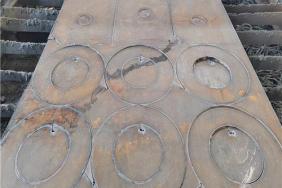
Both steels feature high carbon equivalent and strong hardening sensitivity. Thermal cutting (flame / plasma / laser) produces high-hardness martensite heat-affected zone (HAZ) on cutting edges, leading to three major defects:
- Cold cracks on cutting edges (highly likely for thick plates processed at low ambient temperature);
- Hardened cutting surface with hardness up to HV380~450, causing severe tool sticking and poor machinability in subsequent processing;
- Stress-induced deformation, including warpage and dimensional out-of-tolerance for large-size cut parts.
III. Precautions for Cutting & Machining by Process
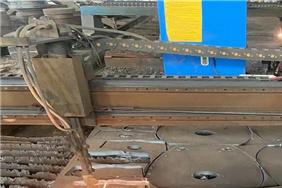
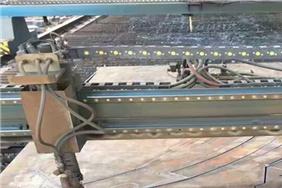
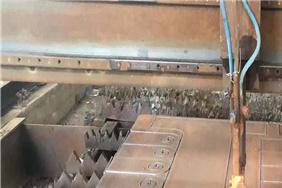
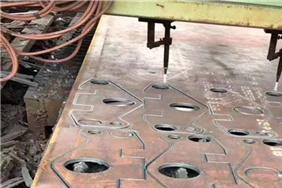
(1) Flame Cutting (Preferred for plates ≥25mm, extra-thick plates 50~200mm)
- Mandatory Preheating (Top Priority)
- Plate thickness ≤50mm: Preheat to 120~150℃;
- Plate thickness >50mm: Uniformly bake the whole plate to 180~250℃; local spot heating is forbidden;
- If ambient temperature <5℃, raise preheating temperature by 50℃ to avoid cracking caused by temperature drop during cutting.
- Cutting Parameter Control
- Oxygen pressure: 0.7~1.1MPa; adopt large-flow diffusion cutting nozzles to ensure complete penetration of cutting kerf;
- Maintain uniform and slower cutting speed (30% slower than ordinary Q355 steel). Fast torch travel that triggers rapid cooling of edges is prohibited;
- Tilt the cutting nozzle reversely at the end of cutting to prevent tearing caused by concentrated stress at the terminal section.
- Slow Cooling Treatment after Cutting Immediately fully cover cut plates with fire-resistant asbestos cloth after cutting, and cool naturally to room temperature for at least 4 hours. Forced air cooling or water quenching is strictly forbidden. For plates ≥80mm thick, perform low-temperature hydrogen removal baking (200℃, 2h) within 1 hour after cutting.
- Machining Allowance & Post-Treatment The carburized hardened layer formed by flame cutting ranges 0.8~1.5mm deep. For load-bearing welded components, reserve a machining or grinding allowance of 3~5mm to completely remove the hardened layer. Flat grinding without allowance is only acceptable for non-load-bearing blanks.
(2) Plasma Cutting (Medium & Thin Plates 6~30mm)
- Advantages: Low heat input, narrow heat-affected zone and thin hardened layer, with lower cracking risk than flame cutting.
- Process Key Points:
- Adopt high-purity oxygen as cutting gas; match current with plate thickness to reduce accumulated heat;
- Preheat to 80~100℃ for plates thicker than 20mm;
- Reserve a 1~2mm processing allowance; light grinding can eliminate the hardened layer.
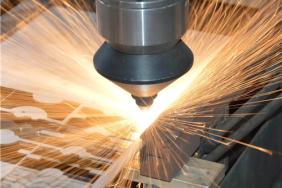
(3) Laser Cutting (Thin plates ≤12mm for high-precision parts)
- Ideal for flanges, small cut pieces and precision blanks with minimal deformation.
- Notes: Instant ultra-high temperature from high-power laser still generates a thin hardened microstructure on cutting edges.
- Pre-treatment: Remove rust and oil stains within 20mm of cutting paths to avoid light reflection and dross adhesion on kerfs.
- Cutting Path Planning: Cut small holes and special-shaped blanks first, then outer contours to release internal stress and reduce plate warpage.
(4) Thermal-Stress-Free Cutting (First Choice for Ultra-High Precision / Fatigue-Critical Parts)
Waterjet cutting: Zero heat-affected zone, no hardening or cracking risks; preheating and edge grinding are not required. Disadvantages: Low efficiency and high cost, suitable for high-end hydraulic components, wind power flanges and fatigue-critical structural parts.
IV. Unique Machining Restrictions for S690 (Distinct from Q690)
- S690 is delivered in quenched & tempered state. Overall high-temperature tempering or re-quenching after cutting is forbidden, which will destroy the original quenched-tempered microstructure and drastically reduce strength and low-temperature toughness. If stress relief is required, only low-temperature baking at 200~250℃ is allowed.
- EU engineering projects impose hardness inspection standards on S690 cutting workpieces: Edge hardness of heat-affected zone shall not exceed HV380; flaw detection is mandatory after grinding off hardened layers.
- Cold bending of S690 is not recommended; bending radius shall be no less than 5 times plate thickness, otherwise microcracks are highly likely to form.
V. Exclusive Machining Guidelines for Q690
- TMCP rolled Q690 allows 30~50℃ lower preheating temperature, with lower cracking risk compared with quenched & tempered S690.
- Impurity content fluctuates among domestic steel mills for Q690; 100% visual inspection for cracks is required after cutting thick plates.
- Domestic equipment has no strict temperature limit for stress relief; short-time stress relief heating at 300℃ will not impair base material performance.
VI. General Specifications for Post-Cutting Processing
- Grinding Requirements: All thermal-cut edges must be ground to metallic luster before welding to eliminate hardened layers, microcracks and dross.
- Machining Rules: Turning, milling or drilling is forbidden before complete removal of hardened layers, which will lead to severe tool wear.
- Welding Coordination: Unify preheating temperature for cutting and welding to eliminate secondary heating procedures.
- Storage Protection: Avoid outdoor low-temperature stacking of semi-finished cut blanks; excessive temperature difference may induce delayed edge cracking.