Application of NM500 Wear-resistant Steel Plate in Mining Dump Trucks
1. Basic Mechanical Properties of NM500 (Core Advantages for Heavy-duty Mining Conditions)
Standard: GB/T 24186-2009, quenched and tempered martensitic wear-resistant steel
- Hardness: 480~540HBW, the highest wear resistance grade within the NM series
- Mechanical Strength: Yield strength ≥1250MPa, tensile strength ranging from 1450MPa to 1650MPa; resistant to permanent deformation under heavy loads
- Wear Service Life: 5–8 times longer than ordinary Q235 carbon steel; 25%–35% higher wear resistance than NM400 and approximately 20% higher than NM450
- Toughness: Charpy impact energy ≥24J at -20℃, capable of resisting low-speed impact from falling ore lumps; not suitable for working conditions with frequent violent impacts from large hard rock blocks
- International Equivalent Grade: Matches the performance of Hardox500, cutting overall vehicle costs as a replacement for imported wear plates
Pain Points of Mining Truck Working Conditions
Continuous abrasive wear from iron ore/granite/gangue, heavy impact from large rocks during loading, long-term heavy loads, corrosion from mine muddy water, and strong scouring during unloading. Conventional carbon steel truck bodies wear through within 3–6 months, resulting in costly downtime for maintenance. NM500 perfectly addresses severe abrasion-prone areas.
2. Application Positions of NM500 on Mining Trucks & Recommended Plate Thickness
2.1 Dump Truck Cargo Body (Core Application, Accounting for 90% of NM500 Consumption)
| Cargo Body Section |
Wear Characteristics |
Recommended NM500 Thickness |
Selection Principle |
| Cargo Floor (Most Vulnerable to Wear) |
Sliding friction of bulk ore, intensive scouring during unloading, bearing full vehicle payload |
12~25mm |
20–25mm for iron mines & hard rock quarries; 12–16mm for coal mines & sandstone sites |
| Lower Half of Side Panels |
Persistent scraping by sliding ore and corner impact damage |
10~16mm |
The upper half suffers minor wear and can adopt low-cost NM400 to reduce vehicle weight and total cost |
| Full Rear Gate & Bottom Wear Strips |
Concentrated impact and friction from bulk ore during discharge |
16~20mm |
Thickened design for high-impact zones to prevent premature penetration and tearing |
| Front Bulkhead (Cab Protection Plate) |
Direct heavy impact from loader bucket dumping |
14~20mm |
Balanced wear resistance and impact resistance to safeguard the driver’s cab |
2.2 Auxiliary Wear-resistant Components
- Wear Lining Strips for Internal Reinforcing Ribs: 8–12mm NM500, preventing premature abrasion and fracture of stiffeners
- Protector Plates for Lifting Base & Cargo Body Hinges: 10–14mm, resisting grinding abrasion from sand and gravel
- Inner Mudguard Liners & Chassis Guard Plates: 6–10mm, against cutting wear from flying crushed rock
- Discharge Chutes & Buffer Wear Blocks: 16–20mm, for zones with concentrated ore impact and intense scouring
3. Selection Criteria: NM500 vs NM400 vs NM450 for Mining Trucks
- Choose NM500: Open-pit mega-mines with 100-ton class haul trucks transporting iron ore, granite and high-hardness gangue; long-distance heavy haulage; mines with limited maintenance space and extremely high downtime costs, dominated by abrasive wear
- Choose NM400: Small and medium coal mines, soil & sand haulage, working conditions with frequent violent impacts from oversized hard rock lumps (higher toughness to avoid cracking)
- Choose NM450: Sand and gravel mines, medium-duty dump trucks requiring balanced impact resistance and wear resistance, a cost-performance compromise solution
4. Manufacturing & Modification Processing Specifications for NM500 (Limitation: Difficult Welding & Cold Forming)
4.1 Cutting & Blanking for Cargo Body Plates
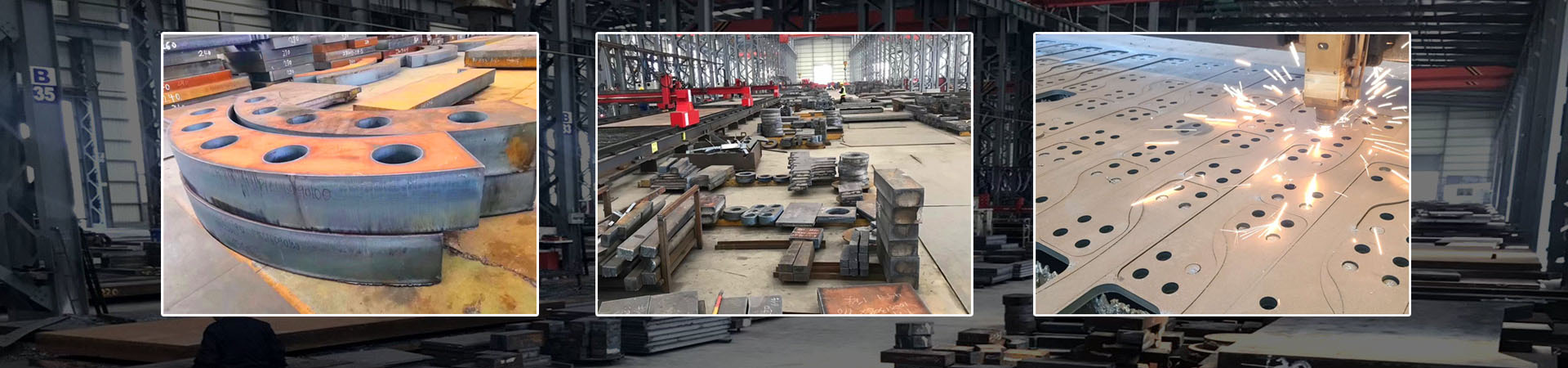
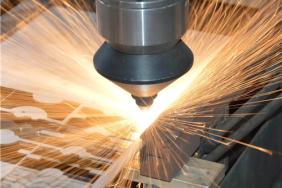
- Preferred Methods: Fiber laser cutting (≤25mm), plasma cutting (≤60mm); minimal heat-affected zone and no micro-cracks on cutting edges
- Flame Cutting Restrictions: Preheat to 180–250℃ before cutting, followed by slow insulated cooling; air cooling is forbidden to avoid edge hardening cracks
4.2 Welding Procedures (Critical for Cargo Bodies, High Risk of Cracking)
- Preheating: All plates thicker than 10mm require preheating to 200–300℃; use the upper limit of 300℃ for thick rear gate plates
- Consumables: Ultra-low hydrogen high-strength covered electrodes E11015-G or high-strength flux-cored welding wires
- Welding Technique: Multi-layer & multi-pass welding with low current and low heat input; interpass temperature ≤180℃; post-weld insulated slow cooling for 2 hours for hydrogen elimination
- Installation Alternative: Light-duty mining trucks may adopt countersunk bolted lining plates to reduce welding crack risks and enable independent single-plate replacement later
4.3 Bending & Forming
Minimum cold bending radius ≥8 times plate thickness; hot bending is recommended for curved wrapping edges of cargo bodies to prevent micro-cracks from cold forming
5. Advantages & Disadvantages of NM500 in Mining Truck Applications
Advantages
- Extended Service Life: Cargo bodies last 18–24 months in hard rock mines, compared to only 3–6 months for ordinary carbon steel; localized repair only is required instead of full body replacement
- Lightweight Payload Boost: To achieve equivalent wear resistance, NM500 plate thickness can be reduced by 50% vs ordinary carbon steel, lowering curb weight, increasing cargo capacity and cutting fuel consumption
- Lower Comprehensive Operating Costs: Despite higher raw material prices, maintenance, downtime and labor replacement costs are drastically reduced, saving tens of thousands of RMB per truck annually for large mines
- Moderate Corrosion Resistance: Alloy elements Cr and Mo improve resistance to electrochemical corrosion caused by mine mud and ore slurry, slowing down thickness loss from rust
Disadvantages (Process Mitigation Required)
- Lower ductility and toughness than NM400; local cracks may occur under continuous violent impact from oversized rock blocks. Thickening or local hardfacing overlay welding is recommended for such zones
- Strict welding and cold forming requirements lead to higher processing costs than structural steel and NM400
- Slightly degraded impact performance under extreme low temperatures (-30℃ and below); NM450 can be partially matched for alpine mining areas
6. Practical Mining Application Cases
- 120-ton Electric Wheel Haul Truck for Large Open-pit Iron Mine: 22mm NM500 for cargo floors, 16mm NM500 for lower side panels. Original Q345 steel bodies wore through in 6 months; NM500 bodies only show minor abrasion after 22 months, requiring only localized repair welding
- 50-ton Dump Truck for Sand & Gravel Quarries: 14mm NM500 floors, 18mm NM500 rear gates. Annual overhaul frequency reduced by 3 times, overall transport efficiency improved by 12%
- Narrow-body Underground Mining Vehicles: 8–12mm NM500 for chassis guards and cargo liners, protecting chassis structures from flying underground rock abrasion
7. Operation & Maintenance Guidelines
- Regular thickness inspection of wear plates; replace plates in advance when residual thickness drops to 50% of original thickness to prevent sudden leakage through worn plates
- Local deep wear pits can be repaired via hardfacing with wear-resistant flux-cored wires instead of full plate replacement
- Standardize loader operation to avoid high-drop direct impact onto front bulkheads, minimizing impact cracks
- Clear accumulated ore and water inside cargo bodies during mine shutdowns to accelerate electrochemical corrosion mitigation
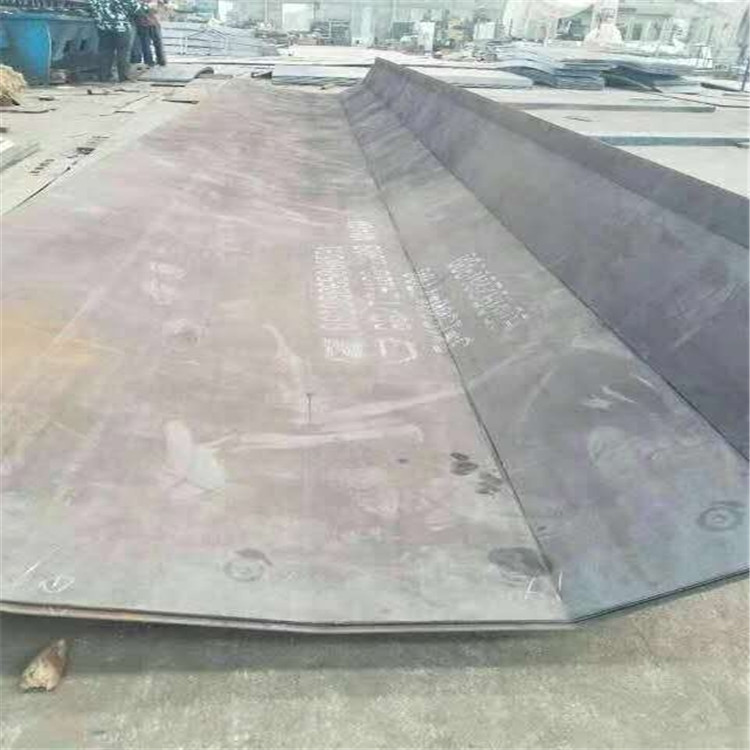
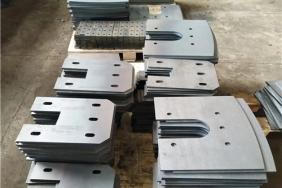
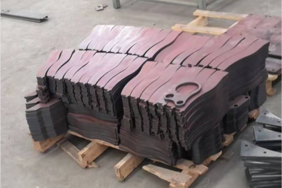
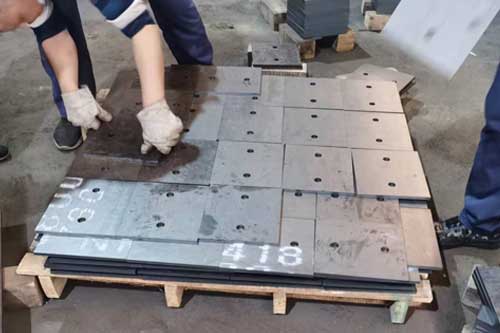
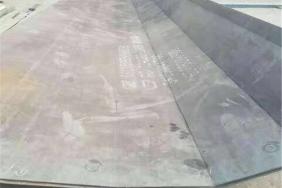
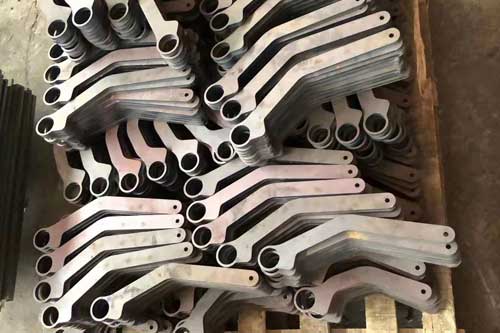
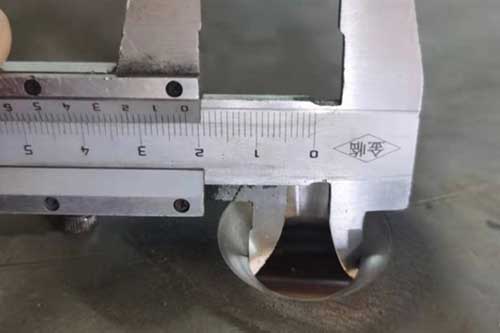
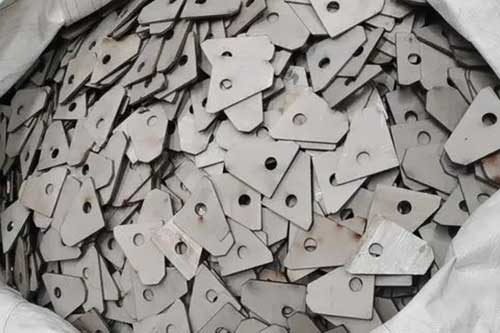
Cutting processing: wear-resistant steel plates (NM360/NM400/NM450/NM500/Mn13), high-strength plates (Q690D/E/S690Q/QL), ordinary plates (Q235B/S235JR), low alloy plates (Q355B/C/D/E/S355JR/J0/J2/K2), carbon bonded plates (45 #, S45C, S50C, bm48c), as well as various special alloy steels from large steel mills such as Wuhan Iron and Steel Group, Liangang, Baosteel, Ansteel, Shagang, Nangang, Hanye, Xingcheng, Yingkou, Ma Steel, etc., as well as Tang Steel, Wenfeng, Ping Steel, etc. The specification is 6MM-500MM thick.
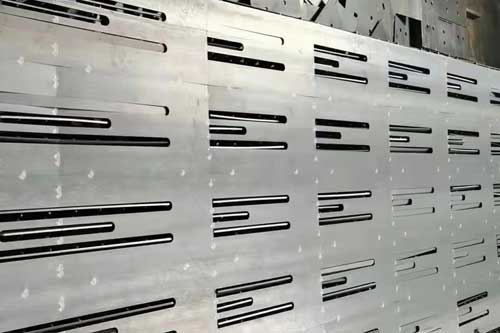
We have good business channels with major steel mills and undertake various types of steel plate OEM processing business. The processing center can cut various supporting materials for engineering machinery, metallurgical equipment, mining machinery, etc. according to customer requirements, such as square plates, circular cakes, flanges, machine side plates, irregular parts, bearing support seats, etc., and process various irregular parts, support seats, machine tool side plates, metallurgical mines, and other supporting materials