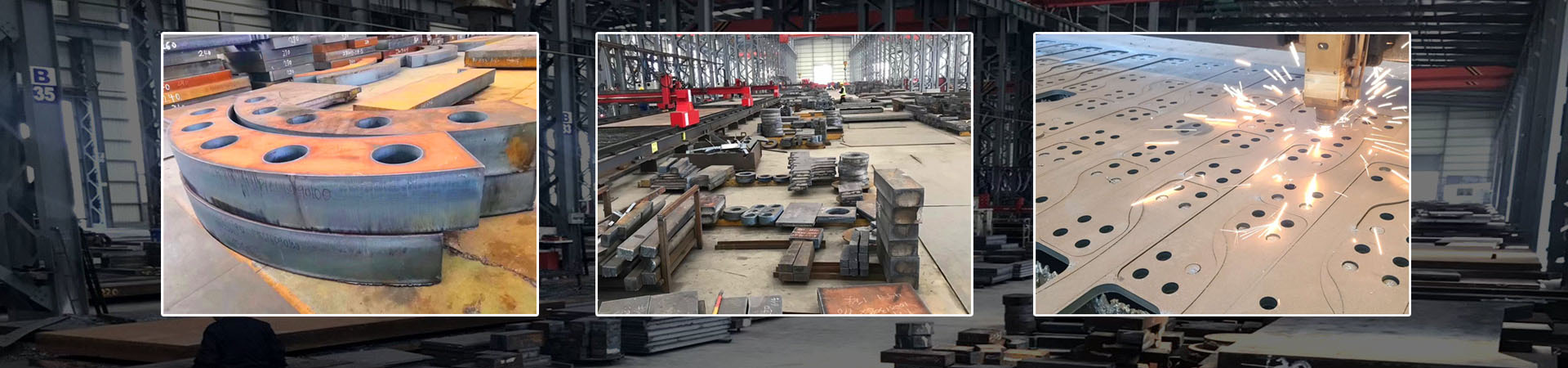
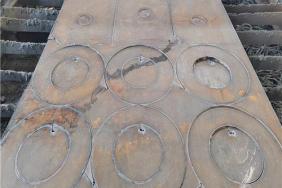
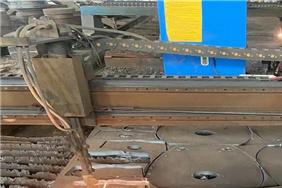
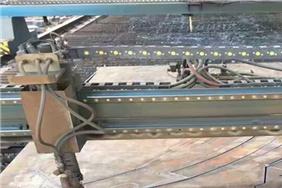
NM450 is quenched and tempered wear-resistant steel with hardness ranging from 420 to 480 HBW. Thermal cutting tends to generate hardened heat-affected zones (HAZ) and microcracks on cutting edges. Five mainstream cutting processes differ greatly in applicable thickness, dimensional tolerance and cut surface quality. Detailed specifications of each process are listed below.
1. Comparison of Five Cutting Processes (Tolerance, Thickness, Advantages & Disadvantages)
1.1 Fiber Laser Cutting (First Choice for High Precision)
Applicable Thickness
6–20 mm; equipment with power above 6000W can cut up to 25 mm, while cutting efficiency drops sharply for plates thicker than 20 mm.
Cutting Tolerance (Industry Test Data + Standard JB/T 10045)
- Linear dimensional tolerance: ±0.05~±0.1 mm
- Repositioning accuracy: ±0.02 mm
- Kerf width: 0.2–0.3 mm, minimal taper ≤0.03 mm per 10 mm plate thickness
- Cut surface roughness Ra ≤12.5 μm, little dross and burr, direct assembly available
Special Process Tips for NM450
- Preheat plates over 16 mm to 80–120°C to prevent hardening and cracking on cutting edges
- High-purity oxygen as auxiliary gas to reduce hardness of heat-affected zones
- Ideal for complex special-shaped parts, tiny holes, precision wear liners and engineering machinery wear gaskets
Disadvantages
Low maximum cutting thickness, high equipment investment; much higher cost for thick plate cutting compared with plasma cutting
1.2 CNC Plasma Cutting (Mainstream for Medium & Thick Plates with Cost Efficiency)
Applicable Thickness
6–80 mm; air plasma for 6–40 mm, water-injection plasma up to 80 mm
Cutting Tolerance (Distinction between Standard Fine Plasma & Underwater Plasma)
- Standard air plasma: linear tolerance ±0.8~±1.2 mm, kerf width 1.5–2.5 mm, large cut surface taper
- Underwater fine plasma (Recommended for NM450): tolerance ±0.3~±0.5 mm, drastically reduced thermal deformation
- Cut surface flatness: ≤0.7 mm for 10 mm plate, ≤1.5 mm for 30 mm plate (JB/T 10045.4)
Process Specifications
- A 1–3 mm hardened layer forms on NM450 cutting edges after thermal cutting; grinding removal is mandatory before welding
- Preheat plates ≥40 mm to 100–150°C and cool slowly to release stress and avoid cracks
- Reserve 2–3 mm machining allowance for subsequent milling or grinding to correct dimensions
Application Scenarios
Bucket liners, chute plates, crusher wear plates, blanking of large-size thick plates, best cost-performance solution
1.3 Flame Cutting (Oxygen-Fuel Cutting, Low-Cost for Extra-Thick Plates)
Applicable Thickness
30–200 mm extra-thick NM450 wear plates; not recommended for plates under 30 mm
Cutting Tolerance
Linear tolerance ±1.5~±3.0 mm, kerf width 3–5 mm, severe dross and large thermal deformation on cut surfaces
Process Standards
- Preheating temperature: 150–250°C, oxygen pressure 0.8–1.2 MPa, low cutting travel speed
- Cover plates with thermal insulation cotton for slow cooling after cutting; rapid water cooling is forbidden to prevent edge cracking
Disadvantages
Wide heat-affected zone, poorest dimensional accuracy; only for rough blanking, requiring over 5 mm machining allowance
1.4 High-Pressure Waterjet Cutting (Cold Cutting without Thermal Deformation)
Applicable Thickness
0–100 mm all thicknesses, zero heat-affected zone
Cutting Tolerance
Linear tolerance ±0.08~±0.15 mm, kerf width 0.8–1.2 mm, vertical cut surface without hardened layers
Core Advantages
Full cold processing; no typical edge hardening or microcracks of NM450. Parts can be welded directly after cutting
Disadvantages
Extremely low cutting speed, high consumable cost; only used for precision wear parts where thermal hardening is prohibited
1.5 Wire Electrical Discharge Machining (WEDM, Ultra-Precision Tiny Parts)
Applicable Thickness
≤50 mm small components, tiny holes and narrow slots
Cutting Tolerance
Ultra-high precision ±0.005~±0.02 mm, optimal surface finish
Disadvantages
Very low processing efficiency; only for small-batch precision molds and wear inserts, not for large-area blanking
2. Summary Table of Tolerance for All Cutting Processes
表格
| Cutting Method |
Applicable Plate Thickness |
Standard Dimensional Tolerance |
Kerf Width |
Heat-Affected Zone |
Recommended Machining Allowance |
| Fiber Laser |
6–20 mm |
±0.05~0.1 mm |
0.2–0.3 mm |
Small |
0–1 mm (Grinding Not Required) |
| Underwater Fine Plasma |
6–80 mm |
±0.3~0.5 mm |
1.2–2 mm |
Medium |
2–3 mm |
| Standard Air Plasma |
6–40 mm |
±0.8~1.2 mm |
1.5–2.5 mm |
Large |
3–5 mm |
| Flame Cutting |
30–200 mm |
±1.5~3.0 mm |
3–5 mm |
Extremely Wide |
5–8 mm |
| Waterjet Cutting |
0–100 mm |
±0.08~0.15 mm |
0.8–1.2 mm |
None |
0–1 mm |
| High-Speed WEDM |
≤50 mm |
±0.01 mm |
0.18 mm |
None |
0 Allowance |
3. Industrial Standard Basis for NM450 Cutting Tolerance (JB/T 10045-2017)
3.1 Tolerance Grades for Thermal Cutting
- Precision Grade (Laser / Waterjet): ±0.5 mm for length ≤1000 mm; ±1.0 mm for length 1000–3000 mm
- Medium Grade (Fine Plasma): ±1.0 mm for length ≤1000 mm; ±2.0 mm for length 1000–3000 mm
- Rough Grade (Flame / Standard Plasma): ±2.0 mm for length ≤1000 mm; ±3.5 mm for length 1000–3000 mm
3.2 Cut Surface Flatness
t ≤20 mm: ≤0.7 mm; 20<t ≤40 mm: ≤1.2 mm; t>40 mm: ≤2.0 mm
3.3 Special Requirements for NM450
The hardened layer on thermal cutting edges is at least 1 mm. Drawings shall specify grinding removal of hardened layers if welding or assembly is required.
4. Process Selection Guide Based on Tolerance Requirements
- High precision, complex contours, thin plates (≤20 mm): Fiber laser cutting, tolerance controlled within ±0.1 mm, grinding-free
- Medium-thickness plates 20–60 mm, medium tolerance, mass blanking: Underwater fine plasma, balanced cost and precision
- Extra-thick plates 60–200 mm, rough blanking: Flame cutting, followed by finish milling
- Thermal hardening forbidden, welding without post heat treatment: High-pressure waterjet cutting, no hardened layers
- Miniature precision wear inserts, tiny holes: Wire electrical discharge machining
5. Key Measures to Improve NM450 Cutting Accuracy
- Plate Preprocessing: Remove surface scale and oil stains; flatten steel plates with flatness ≤0.5 mm per meter
- Preheating for Thermal Cutting: Preheat all plates over 16 mm to 80–150°C to reduce thermal stress deformation
- Cooling Control: Prioritize underwater plasma cutting; cool flame-cut plates slowly, avoid rapid water quenching
- Allowance Reservation: Reserve milling allowance for plasma/flame cutting parts with IT12 or higher precision requirements
- Equipment Calibration: Calibrate guide rails and cutting torch verticality of CNC equipment regularly to control cutting taper